
"Fruit Tree"
6000 article(s) found

Brief introduction of Coffee knowledge Coffee Tree species
MARAGOGYPE [Marijib] MARAGOGYPE is pictographic soybean-[elephant bean] in text. First discovered in 1870, it may have originated in southern Africa [Mozambique or Angola]. When introduced to Brazil, it was widely cultivated because of its popularity. Because it belongs to soybeans and crispy tissue, it provides sour, sweet and fragrant, all excellent

Common sense of Coffee Tree introduces the basic knowledge of coffee
The origin of the coffee tree is Ethiopia in Africa. In botany, coffee trees belong to the evergreen trees of the subgenus Rubiaceae, and coffee beans, commonly known as coffee beans, are actually the seeds of the fruit of coffee trees. They are called coffee beans only because they are shaped like beans. Climate is the decisive factor for coffee cultivation. Coffee trees are only suitable for growing in the tropics or subtropics, so latitude 25 degrees south and north.

The planting temperature of coffee tree is between 15 degrees and 25 degrees.
The origin of the coffee tree is Ethiopia in Africa. In botany, coffee trees belong to the evergreen trees of the subgenus Rubiaceae, and coffee beans, commonly known as coffee beans, are actually the seeds of the fruit of coffee trees. They are called coffee beans only because they are shaped like beans. Climate is the decisive factor for coffee cultivation. Coffee trees are only suitable for growing in the tropics or subtropics, so latitude 25 degrees south and north.

What are the requirements of the planting environment for the growth of coffee trees? How long does it take to bear fruit?
Professional coffee knowledge exchange more coffee bean information please pay attention to the coffee workshop (Wechat official account cafe_style) what are the requirements for the growing environment of coffee trees? How long does it take to bear fruit? Although the coffee tree is called a tree, it is actually an evergreen shrub. If it is not trimmed, it can be as high as 3-9 meters. There is a glossy dark green at the top of the leaf and nothing at the bottom of the leaf

Experience sharing: how to use V60 to make Yunnan small Typica iron pickup truck
Typica iron pickup Typica is one of the oldest native varieties in Ethiopia. The top leaf of Tiebika is bronzed and the bean body is oval or thin. It has elegant flavor, but weak physique, poor disease resistance and low fruit yield. Typica is one of the oldest varieties of Arabica coffee discovered today, and the other is called bourbon. Arabica species originated from Ethiopia

Honduras | La Paz Gong Maya melon area | Bourbon, Kaddura flavor of the small tree manor?
For more information on coffee beans, please follow the coffee workshop (Wechat official account cafe_style) Honduras | Sebastian Town, Gongmayagua District | the flavor of Bourbon and Kaddura in the small Tree Manor? Located in the mountains 50 kilometers southwest of the town of La Paz, it is a dry but cool remote area, with the elevation getting higher and higher, more than 1500 meters

How about Honduran coffee? Honduran sun coffee, small tree manor, cherry drunk.
Professional coffee knowledge exchange more coffee bean information please follow the coffee workshop (Wechat official account cafe_style) front street-Honduras small tree manor sun cherry drunken introduction Honduras is the largest coffee producing country in Central America. Honduran coffee is imported from El Salvador, and like other places, the coffee grade in Honduras depends on altitude: at altitude

How many coffee beans can a coffee tree produce in a year?
How many coffee beans can a coffee tree produce in a year to grow into a high-harvest and high-quality coffee tree? it is necessary to take good care of and select the seedlings. Generally, they begin to sprout about 40 days after sowing, and then transplant them to the greenhouse before they can grow into saplings. Wait until the saplings grow to 40-50 cm high before choosing the healthier saplings to be transplanted to the farm. This approach is more traditional, but only
Coffee made in Yunnan, China, from planting to picking cycle
Coffee planting method introduces coffee drying method (1) drying method: also known as natural drying method, the fruit is spread out in the open-air sun field and dried in the sun. To avoid uneven drying or fermentation, it must be stirred at the right time. The bright red fruit like a log cherry will turn black after a week in the sun, and the skin and flesh will become hard and easy to take off. At night, cover with a tarp to block the night dew and dry it smoothly.

Nicaragua's best quality brother lemon tree estate coffee mellow flavor description origin introduction
Lemon Tree Manor is a dream variety of Java Nica competition, it is different from the general Java coffee, but in Nicaragua successfully reproduced long grain Java species, raw beans large, slender shape, flavor is quite special, beyond the general impression of Java species Lemon Tree Manor is located in Nicaragua YasicaNorte region, Manor by

How often do coffee trees bear fruit? one can produce coffee beans in a year.
How often do coffee trees bear fruit-a fruit that can produce coffee beans in a year CATURRA [Katula] was first found in Brazil and is also the result of a cross with BORBON. Its plant is short and compact, so it has more shade, forming a good windproof effect, so that its flowers are not easy to be blown down by the wind, and bear more fruit. CATURRA tastes like BORB.

Magical red fruit: two legends where coffee beans were discovered
How much do you know about the legend of coffee beans being discovered?
Introduction to Coffee Tree
The planting and regional distribution of coffee trees, coffee trees belong to the evergreen trees of the subgenus Rubiaceae in botany, while coffee beans, commonly known as coffee beans, are actually the seeds of the fruit of coffee trees, just because they are shaped like beans, so they are called coffee beans.

Introduction to the Ecological Environment of Coffee trees
Morphological characteristics Coffee Fruit Coffee Tree is a shrub or small tree of Rubiaceae; leaves opposite, leathery, long ovate; every March, the branches will appear white flowers, petals spirally arranged, the core of flowers jump around the petals, take a closer look, it is really like a small windmill playing in childhood, emitting the fragrance of jasmine; the fruit is oval, berry, crimson, hidden
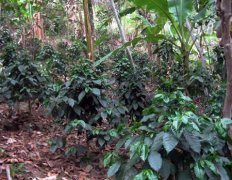
Coffee trees take 3-5 years from planting to fruiting.
Coffee trees take 3-5 years from planting to fruiting. 6-10 years of coffee trees are the most likely to bear fruit, about 15-20 years, is the harvest period. Coffee trees are usually bred in nurseries and grow into saplings, and then moved to coffee farms a year later, in full compliance with the way the Arabs planted and cultivated coffee trees. Coffee trees will continue to take root downward and upward in the first four or five years of their growth.
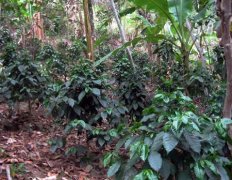
Production of coffee beans coffee output
Coffee trees take 3-5 years from planting to fruiting. 6-10 years of coffee trees are the most likely to bear fruit, about 15-20 years, is the harvest period. Coffee trees are usually bred in nurseries and grow into saplings, and then moved to coffee farms a year later, in full compliance with the way the Arabs planted and cultivated coffee trees. Coffee trees will continue to take root downward and upward in the first four or five years of their growth.

Nicaraguan Lemon Tree Coffee Manor Story characteristics of sipping Flavor of Java Coffee Bean
Java species are similar in shape to ladder card species, and most Java species are short-grained Slor Ber), while Java species with long grain (Long Ber) are few, and Java is a rare Java long grain. Variety and appearance are rare, but the flavor is very clean and delicate. There has never been a similar flavor in the history of Nicaraguan coffee. Java provenance comes from iron seed system, Nicaraguan coffee has always been
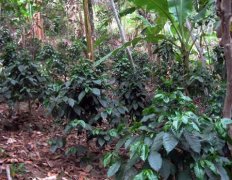
Production of coffee beans Coffee trees from planting to fruiting
Coffee trees take 3-5 years from planting to fruiting. 6-10 years of coffee trees are the most likely to bear fruit, about 15-20 years, is the harvest period. Coffee trees are usually bred in nurseries and grow into saplings, and then moved to coffee farms a year later, in full compliance with the way the Arabs planted and cultivated coffee trees. Coffee trees will continue to take root downward and upward in the first four or five years of their growth.

China's most suitable microclimate for coffee cultivation Introduction to coffee cultivation on the environmental needs
China's most suitable microclimate for growing coffee Introduction to the environmental needs of coffee cultivation The origin of coffee trees is Ethiopia in Africa. Coffee tree in botany, belongs to the Rubiaceae coffee subgenus evergreen tree, and generally known as coffee beans, survey is the coffee tree fruit seeds, only because the shape like beans, so called coffee beans. Climate is coffee growing
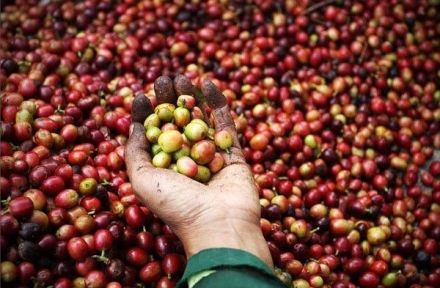
From the planting of coffee trees to the harvest of coffee beans
Coffee trees take 3-5 years from planting to fruiting. 6-10 years of coffee trees are the most likely to bear fruit, about 15-20 years, is the harvest period. Coffee trees are usually bred in nurseries and grow into saplings, and then moved to coffee farms a year later, in full compliance with the way the Arabs planted and cultivated coffee trees. Coffee trees will continue to take root downward and upward in the first four or five years of their growth.